


WhatsApp:
+86-18123969340
+86-13691824013

Views: 0 Author: Site Editor Publish Time: 2026-05-19 Origin: Site


Treating your coolant as an afterthought directly sabotages tool life, cycle times, and shop profitability. Many shops simply pump the same liquid into every machine. They often ignore the severe mechanical forces at play during complex milling and turning operations. The traditional debate between semi-synthetic and fully synthetic fluids isn't about finding the absolute "best" liquid on the market. Instead, it revolves around matching fluid chemistry to specific thermal loads, tooling materials, and shop-floor realities. Getting this wrong leads to ruined finishes and broken tools. This guide unpacks the physical limitations, chemical profiles, and operational realities of these highly engineered liquids. We explore everything from boundary lubrication mechanisms to emulsion stability. Ultimately, you will gain the insights needed to make an evidence-based procurement decision. You can systematically eliminate fluid rancidity and dramatically improve your operational efficiency.
Semi-synthetic fluids (containing 5–50% mineral oil) offer a highly versatile balance of boundary lubrication and cooling, making them the standard for mixed-metal job shops.
Synthetic coolants (zero mineral oil) deliver unmatched heat dissipation and bio-resistance, essential for high-speed machining and grinding, though at a premium initial cost.
Tooling vulnerability: Carbide tools demand the consistent thermal control of synthetics to prevent thermal shock, whereas High-Speed Steel (HSS) benefits from the lubricity of semi-synthetics.
Implementation risk: Proper dilution protocols (always adding oil to water) and monitoring water hardness are just as critical to fluid lifespan as the chemical formulation you choose.
Every machining lubricant serves a dual purpose on the shop floor. It must constantly negotiate between reducing physical friction and removing extreme heat. You cannot have 100% of both properties simultaneously. Fluid engineering always involves a calculated compromise.
Low-speed, heavy-load operations require extreme lubricity. Think about deep-hole drilling of steel or roughing tough titanium alloys. In these scenarios, the fluid must create a robust physical barrier. We call this boundary lubrication. This oily barrier prevents Built-Up Edge (BUE). BUE occurs when the workpiece material pressure-welds itself to the cutting tool. High oil content sharply reduces this mechanical friction. It allows the tool to shear the metal cleanly.
High RPM, light-load operations demand aggressive cooling over lubrication. High-speed milling of aluminum provides a perfect example here. You need rapid heat transfer. Water dissipates heat better than oil. This rapid cooling prevents the workpiece from expanding thermally. If an aluminum part gets too hot, it expands during the cut. When it cools, the dimensions shrink out of tolerance. Superior cooling also stops severe metallurgical damage on the surface.
Abrupt temperature fluctuations destroy rigid tools. Poor coolant application on hot tooling causes extreme internal stress. These rapid changes create micro-fractures in rigid materials. Carbide inserts and TiAlN tool coatings remain highly vulnerable. If you blast cold fluid onto a red-hot carbide tip, it shatters instantly. Consistent thermal control prevents this specific failure mode. Synthetics generally offer more stable cooling curves to prevent thermal shock.
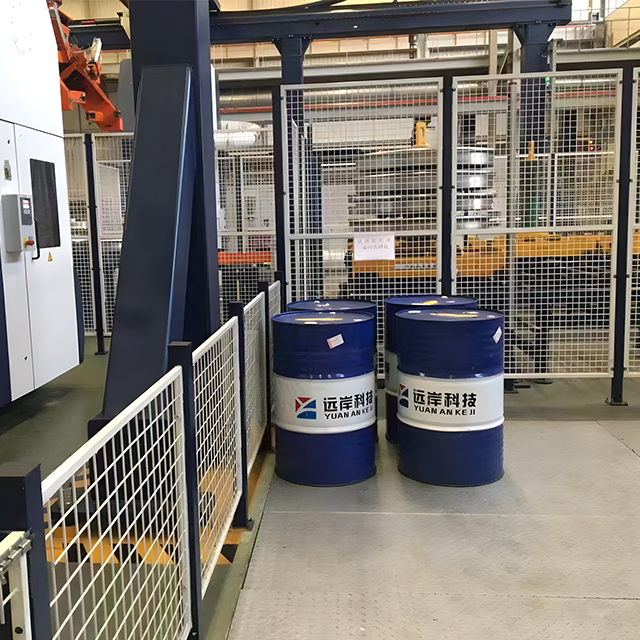
Let us look closely at formulation chemistry. A modern semi-synthetic cutting fluid operates as a highly engineered micro-emulsion. It combines 5–50% highly refined mineral oil with water and complex emulsifiers. The tight emulsion creates a translucent fluid. It bridges the gap between old-school soluble oils and pure chemicals.
The "Goldilocks" Balance: You get excellent cooling combined with adequate boundary lubrication. It handles both friction and heat exceptionally well.
Corrosion Protection: The residual oil film actively protects machine ways. It offers superior rust prevention on cast iron parts and bare metal surfaces.
Broad Compatibility: It handles a wide variety of metals safely. Mixed-material job shops love it. It helps you avoid tedious, time-consuming coolant changeovers.
Biological Risks: Tramp oil can accumulate quickly in stagnant tanks. The mineral oil content then feeds anaerobic bacteria. This leads directly to the infamous "Monday-morning smell" in the shop.
Residue: It leaves a slightly tacky film on machines. Workpieces require slightly more chemical cleaning compared to pure synthetic options.
Use it confidently for standard CNC milling and turning. It excels heavily in mixed-material production runs. Operations utilizing High-Speed Steel (HSS) tooling benefit heavily from the added lubricity. It remains the undisputed workhorse for general-purpose job shops.
A fully synthetic CNC coolant is 100% mineral-oil-free. It relies entirely on chemical polymers, wetting agents, and advanced corrosion inhibitors. These chemical compounds dissolve completely directly into water. They form a true solution rather than an emulsion.
Maximum Heat Dissipation: It offers superior thermal conductivity. This handles extreme high-speed and high-temperature cutting without breaking down.
Exceptional Sump Life: It completely rejects tramp oil naturally. It strongly resists bacterial growth. You will see drastically reduced maintenance and zero foul odors.
Cleanliness: The transparent fluid allows clear visibility of the cutting zone. It leaves absolutely zero oily residue. This slashes secondary part-washing efforts and costs.
Foaming Risks: High-pressure delivery systems agitate the fluid violently. Soft water makes this behavior worse. It is highly susceptible to severe, overflow-causing foaming.
Lack of Mechanical Lubricity: It cannot handle heavy-duty roughing well. Broaching requires physical fluid-film barriers. Pure synthetics fall short in high-friction environments.
Machine Compatibility: The aggressive chemical makeup carries specific risks. It can occasionally strip paint off machines. It might degrade certain elastomer seals on older CNC lathes.
It performs perfectly for high-speed grinding and aerospace alloys. Rigid carbide tooling applications thrive on its thermal stability. High-volume precision finishing also benefits greatly from the unmatched cleanliness.
Proper cutting fluid selection requires a systematic approach. Do not guess based on color or smell. Use this five-point framework for optimal CNC machining performance.
Follow a basic rule of thumb first. Steel and cast iron require semi-synthetics for strict rust prevention. Superalloys and aluminum finishing demand synthetics for a heavy cooling focus. Coating considerations matter just as much. Diamond-Like Carbon (DLC) coatings need high lubricity to perform. Conversely, TiAlN coatings need strict temperature stability to prevent catastrophic flaking.
High-velocity material removal rates (MRR) mandate synthetics. The sheer heat generation is intense. You must evacuate that heat instantly. Conversely, high-torque and low-speed operations require semi-synthetics. You need the physical barrier of oil to prevent metal-on-metal galling.
Assess your through-spindle coolant (TSC) pressure accurately. High pressure causes serious fluid agitation. Hard water causes emulsion splitting in semi-synthetics. It breaks the oil and water apart. Soft water causes massive foaming in synthetics. You must test your local water first before mixing anything.
| Feature / Requirement | Semi-Synthetic Preference | Synthetic Preference |
|---|---|---|
| Dominant Tool Material | High-Speed Steel (HSS) | Rigid Carbide Inserts |
| Operation Speed & Load | Low to Moderate RPM (High Torque) | High Velocity RPM (High MRR) |
| Water Quality Risk | Hard Water (Emulsion splitting risk) | Soft Water (Severe foaming risk) |
Contrast the lower initial purchase cost of semi-synthetics against other long-term operational factors. Synthetics generally offer an extended sump life. They also yield heavily reduced disposal volumes. Furthermore, synthetics extend expensive carbide tool life through superior thermal management. You must look far beyond the initial price per drum to understand true value.
Evaluate operator safety constantly. Certain older fluid additives carry high dermatitis risks for operators. Review local environmental disposal regulations carefully before purchasing. Mineral oil content carries different waste restrictions than chemical polymers. Always secure the Safety Data Sheet (SDS) first.
Formulation chemistry fails completely if mixing procedures fail. You must respect the physical properties of your cutting fluid during preparation.
Always add Oil In Last. Never pour water directly into a bucket of concentrate. This backward action inverts the delicate emulsion structure. It ruins the entire batch instantly. You will end up with a sticky, useless mess. Always pour the concentrate slowly into agitated water.
Different operations require different fluid concentrations. Do not mix one standard tank for every machine.
Grinding: Keep the concentration lean at 3–5%. Synthetic formulations are strongly preferred here to flush microscopic swarf.
General CNC Machining: Target a baseline of 5–7%. You can use either semi-synthetic or synthetic effectively.
Heavy-duty / Tough Alloys: Push it richer to 8–12%. Use semi-synthetic formulas loaded with Extreme Pressure (EP) additives.
Mandate daily Refractometer checks. This prevents invisible concentration drift. Low concentration causes severe tool wear. High concentration causes skin irritation and wastes money.
Implement oil skimmers. You must remove tramp oil immediately. A layer of tramp oil starves the underlying fluid of oxygen.
Run sump aerators. Run them for at least 1 hour daily on weekends. This simple step aggressively prevents anaerobic bacteria accumulation.
We must emphasize that selecting a fluid is not a simple "good vs. bad" choice. It remains an engineering variable deeply tied to tool life, material properties, and thermal dynamics. You must balance lubrication with cooling capacity. You must also align chemical properties with your specific shop environment and maintenance culture. Advise procurement and shop managers to audit their operations immediately. Test your current water hardness. Identify your dominant tooling type, whether HSS or carbide. Document your most common failure modes. Determine if you suffer more from rapid tool wear or fluid rancidity. Once you map these variables clearly, run a controlled, single-machine trial of a new formulation. Evidence-driven testing beats guesswork every time.
A: Excessive foaming usually results from an incompatible combination of operational factors. High-pressure delivery pumps easily agitate the mixture. Using synthetic fluids mixed with excessively soft water greatly exacerbates this issue. Operating the machine at a lower-than-recommended concentration also destabilizes the fluid's anti-foaming agents. Test your water hardness and adjust your mix accordingly.
A: The "Monday-morning smell" comes from anaerobic bacteria multiplying in stagnant tanks. A blanket of tramp oil on the surface starves the tank of oxygen over the weekend. To stop this, install an oil skimmer to remove the tramp oil. You should also run sump aerators for an hour daily to oxygenate the fluid.
A: No, you cannot simply top off the tank with a different fluid type. You must perform a complete pump-out and deep cleaning. Run a system-purge chemical through the lines to remove all oily residue. Cross-contamination destroys the new fluid's chemical stability, leading to immediate emulsion failure and poor performance.
A: The standard baseline concentration for general CNC machining is between 5% and 7%. However, specific materials require adjustments. Grinding operations run leaner, typically at 3% to 5%. Heavy-duty cutting of tough alloys like titanium requires a richer mix, usually sitting between 8% and 12% to ensure adequate boundary lubrication.


