


WhatsApp:
+86-18123969340
+86-13691824013

Views: 0 Author: Site Editor Publish Time: 2026-07-24 Origin: Site


Stricter VOC regulations and ambitious ESG initiatives are fundamentally reshaping industrial manufacturing. Companies must now aggressively transition away from traditional solvent- and oil-based rust preventatives. Yet, many decision-makers hesitate to adopt newer water-based solutions. You might worry about historical issues like sudden flash rust, agonizingly slow drying times, and inferior longevity. These are valid concerns based on outdated chemical technologies.
However, modern formulation advancements change the game completely. A robust water-based corrosion inhibitor for steel can now deliver heavy-duty, long-term protection. To succeed, operations teams simply need to adapt their surface preparation and application protocols. In this comprehensive guide, you will learn how to evaluate these formulas accurately. We will cover how to mitigate production risks and implement them smoothly.
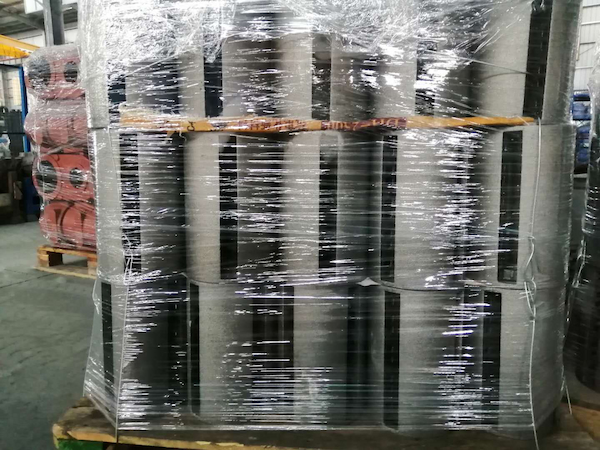
Transitioning your steel surface protection strategy requires a solid justification. Operational pressures and safety concerns lead the charge today.
Local emission standards strictly phase out high-VOC solvents worldwide. Regional environmental agencies enforce tighter restrictions on industrial off-gassing every year. Facilities must adapt quickly to improve their corporate ESG ratings. Switching to water-based fluids helps you meet these tough environmental mandates effortlessly. You avoid regulatory fines and build stronger relationships with local community boards. Modern compliance relies on eliminating hazardous chemicals before they enter your facility.
Daily handling of harsh chemicals creates significant respiratory and dermatological risks. Operators breathe easier when you remove strong solvent fumes from the factory floor. They also experience far fewer skin irritations. Improving shop-floor safety directly boosts morale and overall productivity. When workers feel safe, they perform better. Water-based options dramatically reduce the flammability risks present in daily operations. You eliminate the constant danger of combustible solvent vapors accumulating near heat sources.
How do modern formulas achieve reliable, long-lasting rust prevention without heavy oils? The chemistry revolves around smart polymers and advanced inhibitors.
Water acts simply as the temporary carrier. Once it evaporates fully, advanced polymers and Vapor Corrosion Inhibitor (VCI) additives take over. They form a tough, cross-linked barrier film directly on the metal. This microscopic film blocks oxygen and moisture from attacking the sensitive substrate. VCI molecules further enhance this by vaporizing slightly. They condense onto hard-to-reach metal surfaces, creating an invisible shield in recessed areas.
You do not need to rely on marketing claims. Standard industry benchmarks validate these protective capabilities strictly. Engineers trust tests like ASTM B117 (Salt Spray) and ASTM D1748 (Humidity Cabinet). Quality water-based fluids routinely exceed 1,000 hours in standard humidity testing. They effectively match or surpass older oil-based solutions in controlled environments. Always ask suppliers for certified third-party lab results.
We must acknowledge practical limits openly. Water-based fluids exhibit significantly higher surface tension. They demand much cleaner substrates than traditional solvents do. Curing speeds also depend heavily on your ambient shop humidity. High humidity environments require forced air or heat to cure properly. Ignoring these physical realities leads directly to product failure.
| Feature | Solvent-Based Formula | Water-Based Formula |
|---|---|---|
| Carrier Evaporation Phase | Emits high levels of VOCs | Emits harmless water vapor |
| Standard Drying Speed | Very fast (flash evaporation) | Moderate (requires active airflow) |
| Surface Cleanliness Need | Tolerates residual light oils | Requires perfectly clean metal |
| Shop Floor Hazard Level | High fire and respiratory risk | Low hazard, operator-friendly |
Selecting the ideal industrial metal coating involves careful technical evaluation. You must match the fluid precisely to your exact production workflow.
Evaluate your immediate handling requirements first. Choose dry acrylic or polymer films if parts require immediate packaging. Dry films also prevent shop dust accumulation during staging. Soft or tacky films work better for heavy, undisturbed warehouse storage. Next, consider your subsequent manufacturing phases closely. Can you weld or paint directly over the new coating? Many modern dry films allow direct over-welding safely. They do not cause weld porosity. Conversely, soft films usually mandate a thorough alkaline wash before applying permanent paint.
Not all formulas serve the exact same purpose. Different environments require vastly different barrier strengths.
Clarify your storage environment early in the procurement phase. Over-specifying wastes resources, while under-specifying invites disastrous rust.
Do not just trust a green label stamped on the drum. You must verify what actually makes it an effective, eco-friendly rust inhibitor. Audit the official Safety Data Sheet (SDS) thoroughly. Look for true zero-VOC status and rapid biological degradability. Ensure the total absence of heavy metals or harmful nitrites. A genuinely green product reduces regulatory reporting burdens entirely.
Switching to a modern water-based corrosion inhibitor requires strict process discipline. Poor floor execution leads to instant failures.
Steel must arrive flawlessly clean. You must rigorously remove all existing machining coolants, drawing compounds, and mill scale. Water-based inhibitors will never displace heavy industrial oils. Solvent products can cheat through oily layers, but water simply beads up. If the metal remains dirty, the polymer film cannot bond securely. Implement a reliable multi-stage alkaline wash and pure water rinse prior to coating.
Establish firm best practices for your specific line equipment.
You absolutely cannot skip the mechanical drying phase. The water carrier must evaporate quickly to prevent immediate flash rusting. You absolutely need adequate air circulation, powerful industrial fans, or heated force-curing ovens. Trapped moisture beneath packaging will destroy the parts rapidly. Monitor your shop humidity daily and adjust drying fan speeds accordingly.
| Application Stage | Recommended Best Practice | Common Critical Mistake |
|---|---|---|
| Pre-Cleaning | Multi-stage heated alkaline wash | Leaving residual cutting fluids on steel |
| Application | Monitoring fluid concentration daily | Allowing drag-out to dilute the tank |
| Drying Phase | Using forced high-velocity air | Letting parts air-dry in high humidity |
| Packaging | Sealing only fully dry components | Wrapping wet parts in stretch film |
Finding the perfect chemical match takes systematic testing. Follow a logical procurement process to ensure success.
Document your exact storage conditions first. Note expected seasonal temperature fluctuations and potential salt air exposure. Detail your standard packaging types clearly. Will the parts sit in cardboard boxes, wooden crates, or plastic totes? These metrics guide your supplier conversations. Clear metrics prevent vague performance expectations.
Always cross-reference Technical Data Sheets (TDS) thoroughly. Look for exact coverage rates, usually stated in square feet per gallon. This data lets you calculate real application volumes accurately. Check the recommended dilution ratios carefully. Some products ship ready-to-use, while others require precise mixing onsite.
Never skip a controlled pilot test. Mandate a small-batch trial run in your actual facility. You must test real-world drying times in your specific climate. Evaluate the removal efficiency before committing to full-scale adoption. Process a small batch, store them in your worst-case environment, and inspect them weeks later. This empirical data ensures a seamless final transition.
Adopting advanced water-based technology is no longer a performance compromise. It represents a highly strategic operational upgrade. You gain unmatched worker safety, eliminate VOC compliance headaches, and secure premium rust protection simultaneously. Take action today by auditing your current application line capabilities. Pay close attention to your cleaning and drying stages. Then, request a physical sample for a rigorous pilot test from a reputable corrosion engineering manufacturer. Your facility operations will transform for the better.
A: Yes, if applied to improperly cleaned steel or if drying times are excessively slow due to high facility humidity. Proper air circulation and clean substrates prevent this.
A: Depending on the film build and formulation, protection ranges from 3–6 months for temporary indoor storage to up to 2 years in controlled, packaged environments.
A: It depends on the specific product. Many dry-film, polymer-based inhibitors are designed to be weldable and paintable without removal, whereas soft-film variants require a standard alkaline wash.


