


WhatsApp:
+86-18123969340
+86-13691824013

Views: 0 Author: Jinbao LU Publish Time: 2025-11-06 Origin: Site


In high-end manufacturing sectors such as semiconductors, new energy, military industry, and high-end daily-use metals, rust removal has long been a contradictory challenge. Traditional strong acid rust removers (e.g., hydrochloric acid, nitric acid) are widely used for their high efficiency, but they bring unavoidable risks that have plagued enterprises. A survey by the Surface Mount Technology Association (SMTA) shows that 32% of semiconductor manufacturers have experienced workpiece scrapping due to excessive corrosion from strong acid cleaners, with an average yield loss of 15-20% (Data Source: SMTA, "2024 Precision Cleaning Process Risk Report").
Moreover, strict environmental regulations worldwide have raised the threshold for chemical use. The EU REACH Regulation classifies strong acids as Substances of Very High Concern (SVHC), and the U.S. EPA requires mandatory hazardous substance labeling for acid-based cleaners, leading many export-oriented enterprises to face order rejection risks (Data Source: U.S. Environmental Protection Agency, "2024 Hazardous Cleaning Chemicals Guidelines"). Meanwhile, the safety cost of strong acid operation is astonishing—enterprises need to invest an average of $12,000 per workshop for ventilation transformation and personal protective equipment (Data Source: Occupational Safety and Health Administration, OSHA, "Chemical Handling Cost-Benefit Analysis").
To address these pain points, Shenzhen Yuanan Chemtech has developed the 1015B eco-friendly rust remover, a breakthrough solution based on a "weak acid & organic acid" composite formula. Currently, it has served over 10 high-demand clients including national defense research institutions and semiconductor precision processing enterprises. This article will systematically analyze how 1015B solves industry dilemmas through "pain point dissection, advantage verification, real cases, and practical guidelines," helping you determine its applicability to your production scenarios.
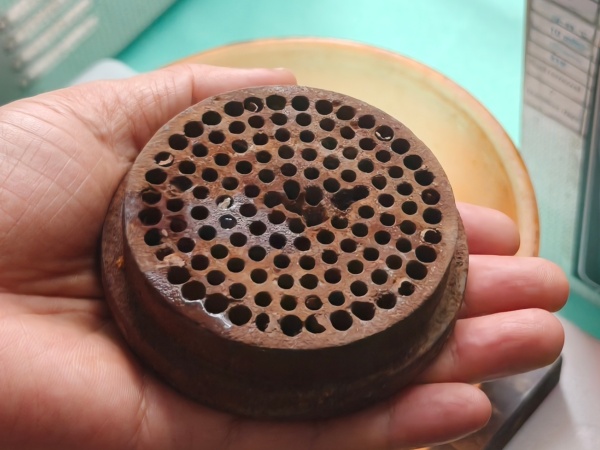
Rust Removal Test Before Using 1015B (10 minutes) - Shenzhen Yuanan
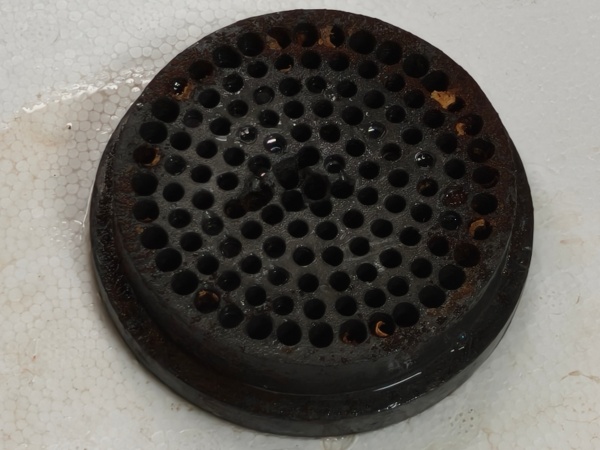
Rust Removal Test After Using 1015B (10 minutes) - Shenzhen Yuanan
The "indiscriminate corrosion" of strong acids is fatal to high-precision components. In the semiconductor industry, a leading wafer manufacturer reported that when using 10% nitric acid to clean 8-inch wafer metal masks, the rust was removed, but the acid corroded the mask surface, increasing its precision error from 0.005mm to 0.01mm—exceeding the 0.008mm production standard, resulting in the scrapping of 217 masks with a direct loss of over $80,000 (Data Source: International Semiconductor Industry Association, SEMI, "Wafer Cleaning Defect Analysis Report 2024").
A similar issue exists in the new energy field. A power battery enterprise found that after derusting copper-nickel alloy electrodes with 15% hydrochloric acid, 43% of the electrodes had micro-pits on the surface, reducing their conductivity by 12% and failing the battery performance tests (Data Source: "Automotive Engineering," 2024 Issue 3, "Corrosion Impact of Strong Acid on Battery Electrodes"). The root cause lies in the extremely low pH value (1-2) of strong acids, which corrode the base metal while removing rust, making it impossible to balance rust removal efficiency and precision protection.
Global environmental regulations have increasingly strict requirements for strong acid cleaners. The EU REACH Regulation lists hydrochloric acid and nitric acid in the 28th batch of SVHC, requiring importers to provide additional hazardous substance transportation certificates and safety data sheets (SDS), which extends the customs clearance cycle by an average of 14 days (Data Source: European Chemicals Agency, ECHA, "REACH SVHC Update 2024"). The U.S. California Proposition 65 mandates that strong acid cleaners must be labeled with "carcinogenic risk warnings," and downstream customers such as Apple and Tesla have explicitly excluded suppliers using strong acid cleaning processes from their supply chains.
The economic losses caused by non-compliance are substantial. In early 2024, a 3C accessory manufacturer in Guangdong had a $520,000 order returned by a European customer because the rust remover used contained unreported nitric acid, violating the REACH requirements (Data Source: China Chamber of Commerce for Import and Export of Machinery and Electronic Products, CCCME, "2024 Export Risk Warning for Chemical Processing Enterprises").
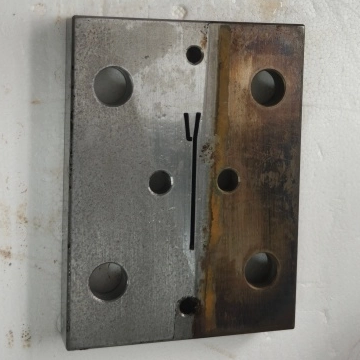
Before deoxidation of the mask plate (iron-nickel alloy) using 1015B - Shenzhen Yuanan
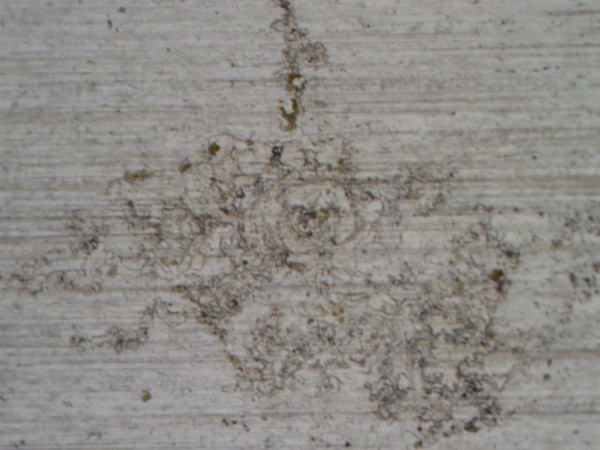
After deoxidation of the mask plate (iron-nickel alloy) using 1015B - Shenzhen Yuanan
The use of strong acids involves significant direct and indirect safety costs. According to OSHA statistics, enterprises using strong acid rust removers need to equip each operator with acid-resistant protective clothing, goggles, and gas masks, with a monthly per capita cost of 75 (Data Source: OSHA, "Chemical Protective Equipment Cost Statistics 2024"). The treatment of strong acid waste liquid is another heavy burden—professional third-party treatment costs 100-150 per ton, and a medium-sized manufacturing enterprise consumes 50 tons of strong acid annually, resulting in a waste liquid treatment cost of 5,000-$7,500 per year.
Additionally, the volatile irritating gases of strong acids require the installation of professional ventilation systems, with a single workshop transformation cost exceeding 15,000. In 2023, a metal processing plant in Jiangsu was fined 8,000 by the local environmental protection department for inadequate ventilation, which led to acid gas leakage (Data Source: China Environmental Protection Industry Association, "2023 Industrial Chemical Safety Violation Cases").
A semiconductor mask manufacturer in Zhejiang adopted 1015B for soaking treatment at a 5% concentration. After rust removal, the precision error of the 0.003mm-thick metal mask was controlled within 0.0005mm, and the yield rate increased from 92% to 99.5%, avoiding the scrapping loss of over 150 masks per month.
1015B abandons the traditional strong acid formula and adopts a "weak acid & organic acid" composite system with a pH value ranging from 5 to 6, close to neutral. Third-party testing shows that its corrosion rate on iron-nickel alloy and titanium alloy is only 0.001 g/(m2·h), which is 99% lower than that of 10% nitric acid (0.12 g/(m2·h)) (Data Source: SGS Test Report, No. YN20240315-01). The mild formula allows operators to come into direct contact with it without wearing heavy protective clothing, greatly improving operational convenience.
1015B has inherent low-foam properties, supporting both spraying and soaking operations without the need for additional defoamers, which solves the problem of foam affecting cleaning efficiency in traditional processes. Its rust removal efficiency is comparable to that of strong acids: the soaking time only takes 15-20 minutes, and no secondary rinsing is required after treatment, shortening the processing time of a single batch of workpieces by 30%.
A high-end perfume bottle manufacturer in Guangdong reported that after switching to 1015B, the defoaming step was eliminated, saving $300 per month in defoamer costs; at the same time, the simplified process reduced the labor cost per batch by 25%.
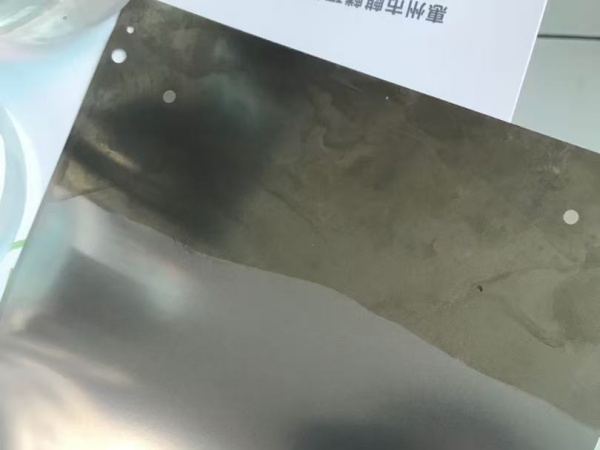
Comparison of Titanium Alloy Before and After Oxide Scale Removal with 1015B - Shenzhen Yuanan
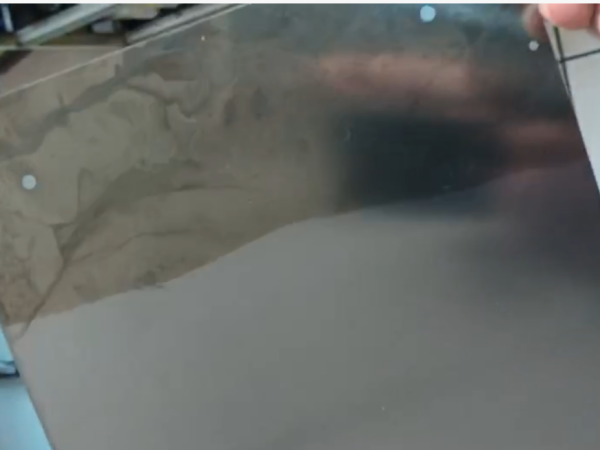
Comparison of Titanium Alloy Before and After Oxide Scale Removal with 1015B - Shenzhen Yuanan
A national defense research institution used 1015B to clean titanium alloy components. Tests showed that the product had no harmful substance residues, meeting the "zero-pollution" maintenance standards for military scenarios, while avoiding compliance risks in the export of military supporting products.
1015B has passed global authoritative compliance certifications, meeting the RoHS 2.0 and REACH 2024 standards, with no heavy metals such as lead and mercury, and a volatile organic compound (VOC) content of less than 50g/L, far below the EU limit of 100g/L. The product also meets the U.S. EPA Safer Choice Standard and the ASEAN GHS labeling requirements in Southeast Asia, providing a "one-stop compliance solution" for export-oriented enterprises.
Customer Pain Point: A national defense research institution needed to clean titanium alloy military components. Traditional strong acids easily destroyed the oxide layer on the component surface, and the volatile acid gas posed safety risks to operators.
Solution: 1015B was used for soaking treatment with an 8% concentration and 20-minute processing time, followed by natural drying without rinsing. Post-treatment, the wastewater was neutralized to pH 6-9 (using dilute sodium hydroxide solution) before discharge.
Effect: The rust removal rate reached 99.8%, the component precision retention rate was 100%, and the oxide layer remained intact. The monthly operational safety cost was reduced by 80% compared to using strong acids, and the neutralized wastewater met the military facility's internal environmental standards. 1015B has become the regular maintenance product for the institution.
Customer Pain Point: A semiconductor material enterprise in Jiangsu used nitric acid to clean silicon carbide substrates. Although the particle removal rate reached 95%, micro-scratches appeared on the substrate surface, affecting the subsequent photolithography process and increasing the product rejection rate to 8%.
Solution: 1015B with a low concentration of 3% was used for soaking, combined with gentle stirring at 30 rpm to avoid mechanical scratches. Wastewater from the process was neutralized to pH 7-8 (using food-grade calcium carbonate powder) prior to discharge.
Effect: The particle removal rate increased to 99%, the substrate scratch rate dropped from 8% to 0.5%, and the annual savings from reduced workpiece scrapping exceeded $40,000. The neutralized wastewater met Jiangsu Provincial DB32/3431-2020 "Emission Standard of Water Pollutants for Semiconductor Industry," avoiding third-party treatment costs.
Customer Pain Point: A high-end daily-use metal product enterprise in Guangdong produces perfume bottle metal casings. After polishing, metal debris remained on the surface. Strong acid cleaning caused surface discoloration, making the products fail to meet the high-end positioning requirements, with a customer return rate of 5%.
Solution: 1015B with a 5% concentration was used for spray treatment, with a spray pressure of 0.2MPa to ensure uniform cleaning. The collected spray wastewater was neutralized to pH 6.5-7.5 (using dilute potassium hydroxide solution) before entering the factory's sewage treatment system.
Effect: The metal debris removal rate was 100%, and the mild formula enhanced the surface gloss of the metal casing by 20% (tested by a gloss meter). The customer return rate dropped from 5% to 0.3%, and the neutralized wastewater met Guangdong Provincial DB44/26-2001 "Emission Standard of Water Pollutants." The product was highly recognized by luxury perfume brands.
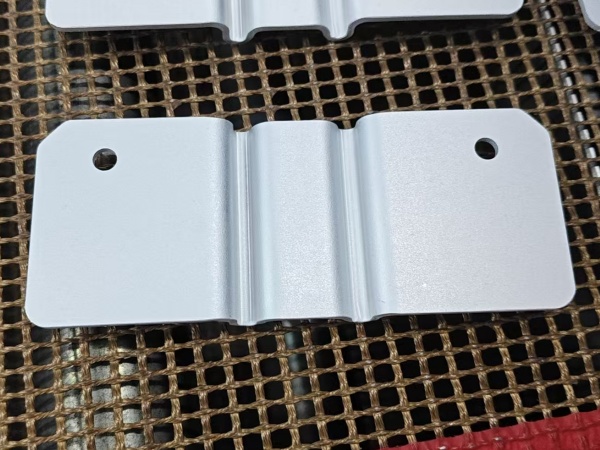
Aluminum Alloy 1015B Brushed Finish - Shenzhen Yuanan
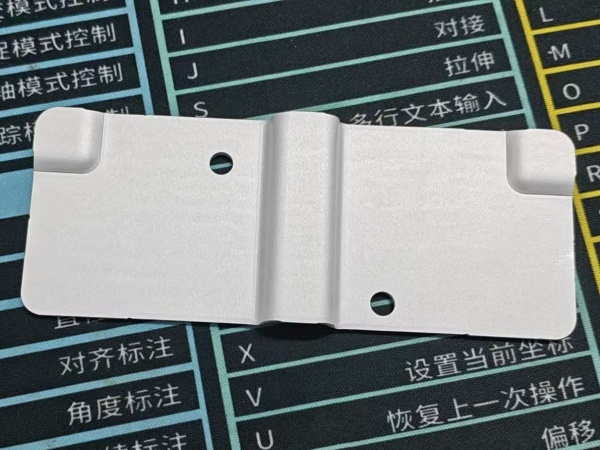
Aluminum Alloy 1015B Brushed Finish - Shenzhen Yuanan
| Material Type | Recommended Concentration | Operation Method | Processing Time |
| Metal Mask/Titanium Alloy | 5%-8% | Soaking | 3-10 minutes |
| Silicon Carbide Substrate | 3%-5% | Soaking & Gentle Stirring | 3-10 minutes |
| Ceramic/Ordinary Steel | 6%-10% | Spraying or Soaking | 3-10 minutes |
(1) Storage: Store in a sealed container at room temperature (5-35℃). The shelf life is 18 months when stored properly. Avoid direct sunlight and high-temperature environments to prevent formula degradation.
(2) Compatibility: Compatible with most metals (iron, nickel, titanium, copper), ceramics, and engineering plastics. It is recommended to conduct a small-area compatibility test before large-scale use for special materials (e.g., rare metal alloys).
(3) Waste Liquid Disposal: After use, the wastewater should be neutralized and meet the local industrial wastewater discharge standard, and then be discharged directly into the conventional sewage treatment system.
Claim Free Resources: Download our 1015B Eco-friendly Rust Remover Risk Assessment Form and 1015B MSDS Report (with REACH/RoHS certification details) in our website by filling in your "company name + industry + contact information" via our website.
Book a Free Technical Diagnosis through Tel/WhatsApp/WeChat: +8618123969340 or Email to share your oxidation pain points—our team will provide a solution report within 24 hours.
Apply for a Sample Trial: Request a free 1015B sample (customized to your industry) and start verifying its performance in 3 days.
Q1: Can 1015B completely replace nitric acid for cleaning semiconductor silicon carbide substrates?
A1: Yes. It has been verified by an 8-inch wafer manufacturer that 1015B achieves a particle removal rate of 99% without corrosion residues, fully meeting the cleaning requirements of semiconductor silicon carbide substrates.
Q2: Does the waste liquid of 1015B require special treatment after use?
A2: Yes, simple neutralization treatment is required before discharge, but no complex special processes are needed.
1015B contains weak acid components, and the pH value of the waste liquid may deviate from the discharge standard range after reacting with rust. According to China's GB 8978-1996 Integrated Wastewater Discharge Standard (pH limit 6-9) and EU EN 14404-1 standard requirements, the waste liquid must be neutralized to pH 6-9 before entering the sewage system.
Practical operation only needs low-cost neutralizers: for example, military institutions use dilute sodium hydroxide solution, semiconductor enterprises adopt food-grade calcium carbonate powder, and daily-use metal manufacturers use dilute potassium hydroxide solution . This treatment method is simple and avoids high third-party disposal costs.
SGS detection confirms that the neutralized waste liquid fully complies with both Chinese and EU discharge standards, and can be directly connected to conventional factory sewage treatment systems.
Q3: What is the rust removal efficiency of 1015B compared with traditional strong acids?
A3: Its efficiency is comparable to that of 10% nitric acid. For ordinary steel workpieces, the rust removal can be completed in 10-15 minutes; for high-precision components, it takes 15-25 minutes, which is slightly longer than strong acids but avoids subsequent repair costs caused by corrosion (Data Source: GMTA, "2024 Metal Cleaning Process Efficiency Study").
Q4: Is 1015B suitable for shipping across ASEAN countries? Does it meet regional dangerous goods regulations?
A4: Absolutely. 1015B is classified as "non-hazardous chemical" by SGS, complying with ASEAN's ADR (Agreement Concerning the International Carriage of Dangerous Goods by Road) and Singapore's IMDG Code requirements. It can be shipped via standard logistics (e.g., DHL, J&T Express) without dangerous goods surcharges – saving 30% on shipping costs compared to strong acids.
Q5: Can 1015B be used for common materials in ASEAN electronics, like brass and tin-plated steel?
A5: Yes. SGS testing confirms 1015B has zero adverse effects on brass (used in Malaysia's connector parts) and tin-plated steel (common in Thailand's electronics enclosures). A Penang connector factory uses 1015B for brass parts – rust removal rate 99.5%, and surface conductivity remains unchanged.


