


WhatsApp:
+86-18123969340
+86-13691824013

Views: 0 Author: Site Editor Publish Time: 2026-05-20 Origin: Site


Selecting the correct carrier for your mold release agent represents a critical operational decision. It directly impacts your cycle times. It alters defect rates. It determines your overall facility compliance. These agents account for merely a fraction of total manufacturing expenses. However, they influence production efficiency and part yield entirely. Engineers and plant managers face an evolving debate today. The choice between water-based and solvent-based chemistries has shifted dramatically. It is no longer a simple performance versus environment argument. Modern formulation advancements have moved the baseline significantly. You must look beyond outdated industry assumptions to stay competitive. This guide provides an evidence-based evaluation framework. It helps manufacturers select the exact chemical carrier suited for their specific molding processes. You will learn how to navigate facility constraints effectively. We also cover essential post-molding requirements in detail. Discover actionable insights to optimize your production floor today.
Performance Realities: Solvent-based agents still dominate high-stress, rapid-cure environments (like aerospace), while modern water-based release agents match performance in most standard composite and automotive applications.
Hidden TCO: Water-based agents drastically lower hidden costs, including ATEX-compliant ventilation equipment, hazardous shipping fees, and fire-risk insurance premiums.
Application Sensitivity: Water-based systems require stricter ambient temperature control and longer flash-off times to prevent "trapped steam" defects, whereas solvents offer superior surface wetting and rapid evaporation.
Validation: Implementation should always be validated using controlled surface energy checks (e.g., the Tape Test) rather than relying solely on visual inspection.
Active ingredients dictate the actual release slip. Materials like silicone, synthetic waxes, fluorocarbons, or PTFE create the physical barrier. However, the carrier dictates how those ingredients reach the mold surface. It determines how quickly the barrier cures. It also controls how the liquid interacts with complex mold geometries. Understanding this carrier mechanism helps prevent common molding defects.
Manufacturers historically relied on solvent-based systems. These formulations utilize petroleum distillates or mineral oils as their primary delivery mechanism. They offer distinct physical behaviors on the production line.
Exceptionally low surface tension: Solvents spread aggressively. They rapidly coat intricate details and deep mold crevices.
Fast flash-off times: The carrier evaporates almost instantly at room temperature. This rapid drying supports high-speed production cycles.
Chemical volatility: Solvents release High Volatile Organic Compounds (VOCs) into the air. This creates flammability risks. It also degrades indoor air quality significantly.
Chemical engineers have modernized the industry. They now utilize water as the primary delivery mechanism. These modern systems rely on advanced emulsifiers to keep active ingredients suspended.
Zero-to-low VOCs: Water carriers eliminate toxic vapor emissions. They are non-flammable and safer for operators.
High dilution capability: You can dilute concentrated formulations on the shop floor. This reduces chemical storage footprints drastically.
Higher surface tension: Water naturally beads up on metal surfaces. Achieving uniform coatings requires specialized spray equipment.
Slower evaporation rates: Water takes longer to flash off. Operators must adjust process timing to avoid trapping moisture under the curing resin.
| Carrier Property | Solvent-Based | Water-Based |
|---|---|---|
| Evaporation Rate | Rapid (Seconds) | Slower (Minutes or requires heat) |
| Surface Tension | Very Low (Excellent wetting) | High (Requires atomization) |
| VOC Emissions | High | Zero to Very Low |
| Flammability | High Risk | Non-Flammable |
Not all manufacturing environments tolerate the same chemical carrier. Evaluating your specific resin type is non-negotiable. You must also consider mold complexity and operating temperatures. A mismatched carrier causes severe part defects and ruined tooling.
A high-quality water-based release agent serves as the default choice here. Standard fiberglass operations adapt easily to these systems. Polyurethane processing and concrete casting also benefit greatly. Concrete actually possesses a physical composition highly compatible with water carriers. Operators can generally accept slight increases in cycle times. The environmental benefits far outweigh minor evaporation delays.
Aerospace components and high-end sporting goods present different challenges. These sectors require strict dimensional tolerances. Finding the right epoxy release agent is critical. Operations often demand semi-permanent solvent-based agents. Solvents ensure an absolute minimal transfer of contaminants. They deliver a flawless Class-A surface finish. More importantly, solvents evaporate completely before the resin enters the mold. Residual moisture from a water carrier would actively inhibit the epoxy cross-linking process. This inhibition ruins the structural integrity of the final composite part.
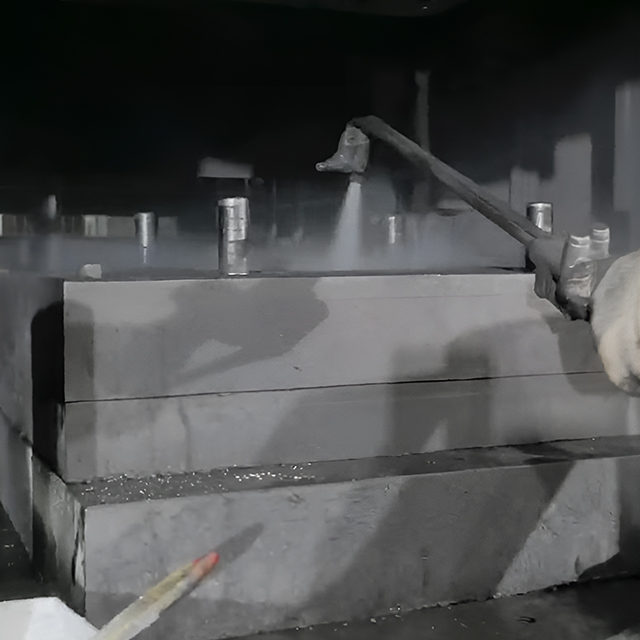
Heavy manufacturing demands robust thermal performance. Operations needing a forging release agent face intense heat. Working temperatures often exceed 400°C. Temperature strictly dictates your carrier choice at these extremes. Heavy industries rely on specialized carriers. These carriers deliver solid lubricants like graphite or boron nitride. Applying standard water-based systems to a 400°C die causes violent boiling. The water flashes to steam instantly. This steam blast scatters the active lubricants unevenly. It leaves bare metal exposed to molten material, causing immediate die failure.
Regulatory bodies aggressively lower permissible exposure limits for manufacturing chemicals. Staying ahead of these regulations protects your workforce and your facility.
Solvent vapors contribute heavily to greenhouse gas emissions. They also create hazardous work zones. Flammable vapors require strict compliance measures. European markets mandate strict ATEX directives for explosive environments. US facilities face intense OSHA scrutiny. Solvent usage demands explosion-proof storage areas. Facilities must install specialized air-filtration systems. Operators require robust personal protective equipment (PPE) daily.
Legacy solvent systems sometimes harbor hidden dangers. Some older formulations utilize tin compounds to speed up curing. Others rely on specific fluorinated carriers. Global health organizations are currently phasing out these hazardous materials. Long-term exposure to these chemicals presents severe health risks for line workers. Transitioning away from them reduces toxic exposure drastically.
Green manufacturing is no longer optional. It represents a strict business-to-business requirement. Transitioning to water-based agents helps manufacturers hit their corporate ESG targets. Environmental, Social, and Governance compliance opens new doors. Tier-1 automotive brands demand green supply chains. Consumer goods companies audit their partners for sustainable practices. Modernizing your chemical carriers ensures you remain an approved vendor.
Switching chemical carriers requires a systematic approach. Randomly testing chemicals on the production line causes unnecessary downtime. Use this actionable framework to structure your testing phase.
Define the Tolerance for Transfer: Evaluate your post-molding operations first. Will you paint or bond the final composite part? If yes, select a low-transfer formulation. Semi-permanent agents bond chemically to the mold. They do not transfer onto the part. Sacrificial agents transfer heavily and ruin paint adhesion.
Audit the Thermal Environment: Match the formulation strictly to your mold temperatures. Measure the exact surface temperature before application. Ensure molds are hot enough to flash off water carriers. However, do not apply liquids to excessively hot molds. Extreme heat causes thermal shock or boiling defects.
Run the Tape Test (Verification): Never rely on visual inspections alone. Clean the mold thoroughly. Apply the trial release agent and let it cure. Perform a standard Tape Test. Press a strip of masking tape firmly onto the mold surface. Pull it off. If the tape adheres strongly, the agent failed to cure. If the tape peels off without resistance, the chemical barrier is active.
Pilot Testing: Never roll out a new carrier chemistry facility-wide immediately. Run small-batch tests on isolated machines. Monitor the tool surface closely. Watch for chemical build-up over 50 continuous pulls. Scaling indicates poor application technique or a mismatched formulation.
Chemistry rarely causes complete production failures. Implementation techniques cause the majority of issues. In fact, application errors account for 90% of release failures during a transition. Proper operator training prevents these common disasters.
Solvent systems feel highly forgiving to operators. The fast evaporation hides poor technique. Standard sweeping spray motions work perfectly fine. Operators hold the gun 8 to 12 inches away and coat the tool quickly.
Water-based systems demand strict precision. High surface tension requires specialized equipment. You must use high-atomization spray nozzles. These nozzles break the liquid into a fine mist. Over-application leads to immediate pooling. Liquid pooling causes thick, uneven barrier layers. Wipe-on techniques also differ. Never pour water-based liquids directly onto the mold. Pour the liquid onto a clean microfiber cloth. Wipe the tool using overlapping circular motions.
Operators must recognize defects early. Understanding the root cause saves valuable production time.
| Observed Defect | Root Cause | Corrective Action |
|---|---|---|
| Trapped Moisture / Pitting | Applying water carriers to a cold mold. Closing the mold before full evaporation. | Increase flash-off time. Introduce forced warm air. Elevate mold temperature. |
| Mold Fouling / Build-up | Applying excessively thick layers. Using sacrificial agents too frequently. | Refine operator spray techniques. Switch to a semi-permanent formulation. |
| Pre-Release | The barrier layer is too slippery for the specific resin profile. | Reduce application volume. Clean the mold and apply a lighter coat. |
Trapped steam creates distinct pitting marks on the composite surface. This happens when resins hit wet molds. The water boils under the curing resin. It leaves tiny craters behind. You must ensure the carrier evaporates completely. Mold build-up requires different interventions. Thick chemical layers ruin part dimensions over time. Operators must apply micro-thin layers consistently.
The performance gap between chemical carriers has closed entirely. You no longer need to sacrifice efficiency for safety. Solvent-based agents remain essential for specific, high-precision applications. Advanced epoxy molding and extreme-temperature die casting still rely on them. However, water-based technology represents the compliant standard today. It dominates the vast majority of composite molding operations globally.
Your next step requires active evaluation. Map your exact temperature profiles across all production lines. Document your secondary processing needs carefully. Identify whether parts require painting or gluing. Request specialized release agent samples from trusted suppliers. Conduct controlled cycle-time audits directly on your shop floor. Validating the chemistry in your actual environment guarantees optimal manufacturing results.
A: Yes, but it presents significant challenges. Cold application drastically increases the required evaporation time. High surface tension makes the liquid bead up. Without forced air or strict ambient temperature controls, trapped moisture remains on the tool. This trapped water causes surface pitting and severe defects in the final composite part.
A: Sacrificial agents transfer slightly onto the molded part. They require manual reapplication after every single production cycle. Semi-permanent agents chemically bond directly to the mold surface. They allow for multiple part pulls before touch-ups become necessary. This bonding greatly reduces machine downtime and prevents secondary painting interference.
A: Carrier-free formulations consist of 100% active ingredients. They contain no water or solvent to evaporate. These formulations are highly specialized. Manufacturers use them exclusively in cleanroom environments. They prevent airborne contamination during electronics or medical device manufacturing, where evaporating carrier vapors remain entirely unacceptable.


